
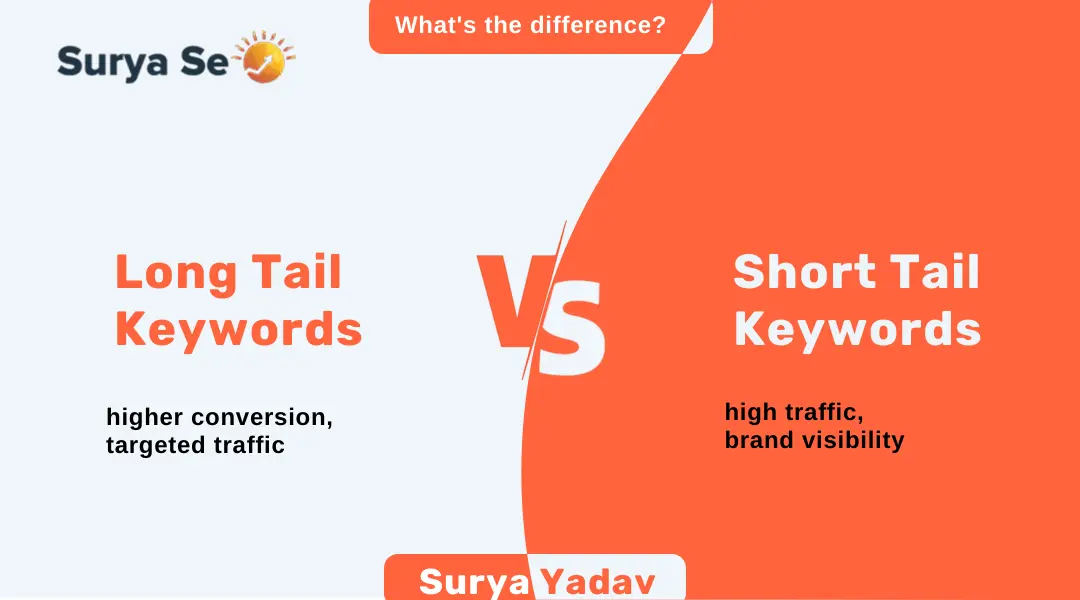
Today in digital marketing using keywords in the right way is very important. If you want your website to appear on Google and get the right audience you need to know the difference between long tail vs short tail keywords. Many beginners make the mistake of only using high volume keywords but this can waste time and effort. At Surya SEO we always help businesses find the right mix of keywords to get both traffic and sales. In this guide we will explain everything about short tail and long tail keywords with examples, main differences, and a simple keyword strategy for your website.
What Are Short Tail Keywords?
Short tail keywords or head keywords are usually 1 or 2 words. They are general and used by people who are just starting to search. These keywords have high search volume which means many people search them every month but they are also very competitive. Ranking for short tail keywords takes time and effort.
Examples of short tail keywords:
- Shoes
- Digital marketing
- Laptops
People also search for phrases like short tail keyword meaning, short tail keyword in SEO, and what is short tail keywords to learn more.
Short tail keywords are good for getting lots of traffic but conversion is usually low because they are general. Users searching these keywords may just be looking for information or browsing. At Surya SEO we suggest using short tail keywords on homepage or main category pages because these pages get broad traffic and help build brand awareness. This helps your website get noticed while you work on specific keywords for more sales.
What Are Long Tail Keywords?
Long tail keywords are phrases with 3 or more words. They are more specific than short tail keywords. The search volume is lower but they bring users who are closer to buying or taking action which means better results.
Examples of long tail keywords:
Best running shoes for flat feet
Affordable laptops under 30000 in India
How to learn digital marketing for beginners
Long tail keywords are best for blog posts, FAQs, product pages, and guides. They reach users who know what they want. For example, someone searching “best running shoes for flat feet” knows what they want and is likely to buy soon. Long tail keywords also help smaller businesses compete with big brands because they are less competitive. At Surya SEO we suggest using long tail keywords in blogs, product descriptions, and service pages because this brings targeted traffic and better results.
Long Tail vs Short Tail Keywords Key Differences
| Feature | Short Tail Keywords | Long Tail Keywords |
| Length | 1 or 2 words | 3 or more words |
| Search Volume | High | Low |
| Competition | High | Low |
| Conversion Rate | Low | High |
| Search Intent | General | Specific |
| SEO Difficulty | Hard | Easy |
More details
- Search Volume: Short tail keywords get a lot of traffic but many users may not take action. Long tail keywords get fewer users but these users are more likely to buy.
- Competition: Short tail keywords have high competition and big brands rank for them. Long tail keywords are easier for small businesses to appear in search results.
- User Intent: Users searching short tail keywords often browse. Users searching long tail keywords have a specific problem or question.
- ROI and Conversion: Long tail keywords give better results because the traffic is targeted. Short tail keywords bring traffic but less conversion.
Why Both Are Important for SEO
At Surya SEO we suggest using a mix of both keywords.
- Short tail keywords are good for homepage and main category pages. They get wide traffic and build brand awareness.
- Long tail keywords are good for blogs, FAQs, and product pages. They get targeted users and increase sales.
Using both types of keywords improves overall SEO performance. Short tail keywords give traffic and visibility. Long tail keywords give better engagement and higher sales. This mix is the key to a strong keyword strategy.
How to Find the Right Keywords
Finding the right keywords needs research and simple tools.
- Keyword Research Tools: Google Keyword Planner, Ahrefs, SEMrush, or Ubersuggest help you find both short tail and long tail keywords.
- Check Competitors: Look at which keywords your competitors use and how they make their content. This shows what works in your niche.
- Check Search Intent: See top pages for a keyword to know if users want information, a product, or a solution.
Choosing the wrong keyword can waste time and lower results, so know both short tail and long tail keywords before writing content.
Tips to Use Keywords Naturally
- Use short tail keywords in headings, meta titles, and main pages.
- Use long tail keywords in blogs, FAQs, and product descriptions.
- Use related keywords like the difference between long tail and short tail keywords, short tail keywords and long tail keywords, and long tail keywords meaning naturally.
- Avoid keyword stuffing. Make content easy to read and helpful.
At Surya SEO we make sure content is made for user intent, so it not only ranks but also helps users take action.
Conclusion
Knowing long tail vs short tail keywords is very important for SEO success. Short tail keywords get traffic and brand awareness. Long tail keywords get better conversion and targeted users.
A simple mix with proper keyword research and SEO plan can improve website results and sales.
Surya SEO can help you make a keyword plan using both short tail and long tail keywords so your content reaches the right people at the right time and gives good results.
Frequently Asked Questions
What are short tail keywords?
Short tail keywords are 1–2 word phrases with high search volume and general intent.
What are long tail keywords?
Long tail keywords are 3+ word phrases that are specific and often lead to higher conversions.
Which is better for traffic, short tail or long tail keywords?
Short tail keywords get more traffic, but long tail keywords attract more targeted users.
Which keywords have higher competition?
Short tail keywords have higher competition; long tail keywords are easier to rank for.
Where should I use short tail keywords?
Use short tail keywords on your homepage, main category pages, and headings.